


2027 Sailing Expedition Schedule
April: Greek Islands and Ionian Sea Sail Training
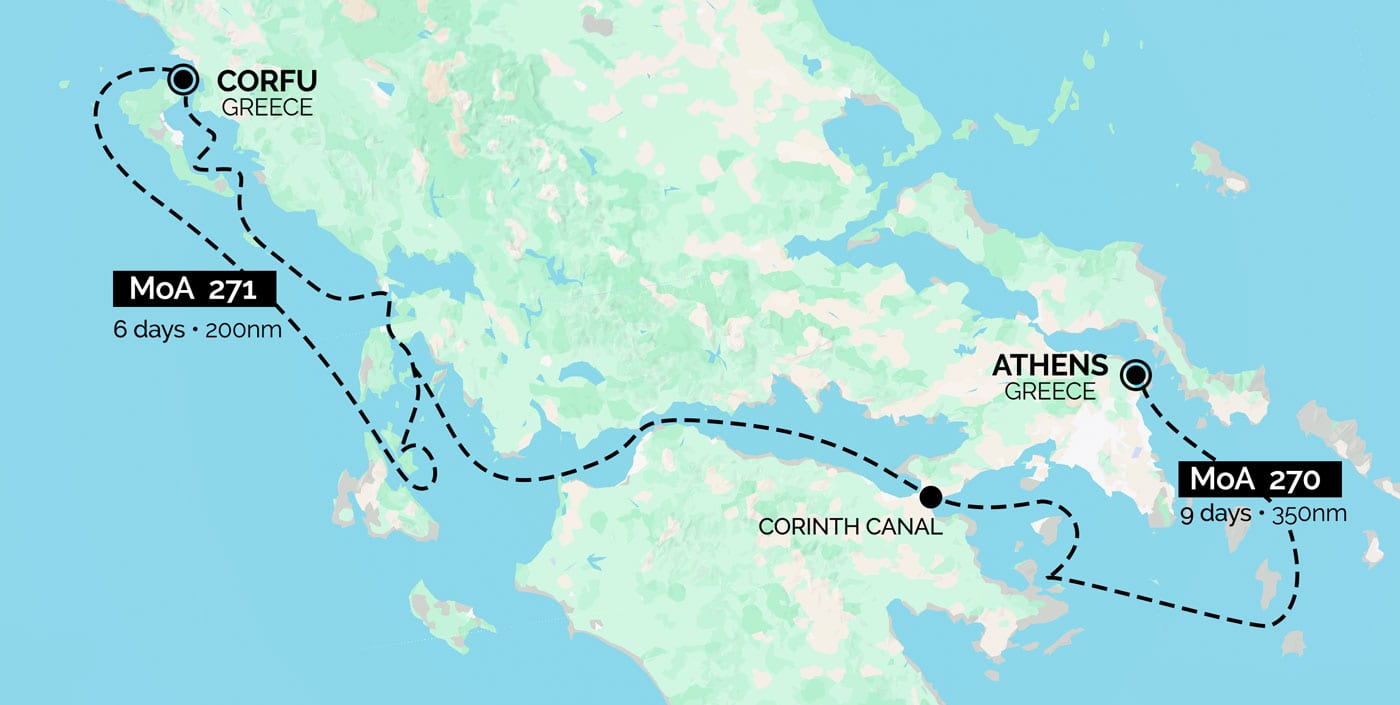
Our 2027 sailing schedule will start in the Greek Islands. We are offering two Greece/Albania coastal expeditions (270 & 271). The first expedition begins outside of Athens on the Euboean Gulf and explores the Saronic islands near Athens before heading West towards the Ionian Sea through the historic Corinth Canal. The second expedition (271) explores the beautiful waters of the Ionian Sea. These coastal expeditions are designed to include some time for lessons at anchor, followed by sailing and putting into practice the topics discussed. There will be overnight sailing on both these expeditions.
April-May: Passagemaking, Mediterranean Sea
Don't let the enclosed nature fool you, the Mediterranean Sea is true offshore sailing. These roughly 600nm passages are designed to give sailors real hands-on passage experience. You will be standing watch, navigating, adjusting and reefing sails, analyzing weather forecasts, checking on board systems, and implementing shipboard safety protocols. You learn by doing all of it. You'll experience the flow of big weather systems and the abrupt changes that are frequent in the Med. You’ll learn how make good choices for both speed and crew comfort. These are valuable offshore miles.
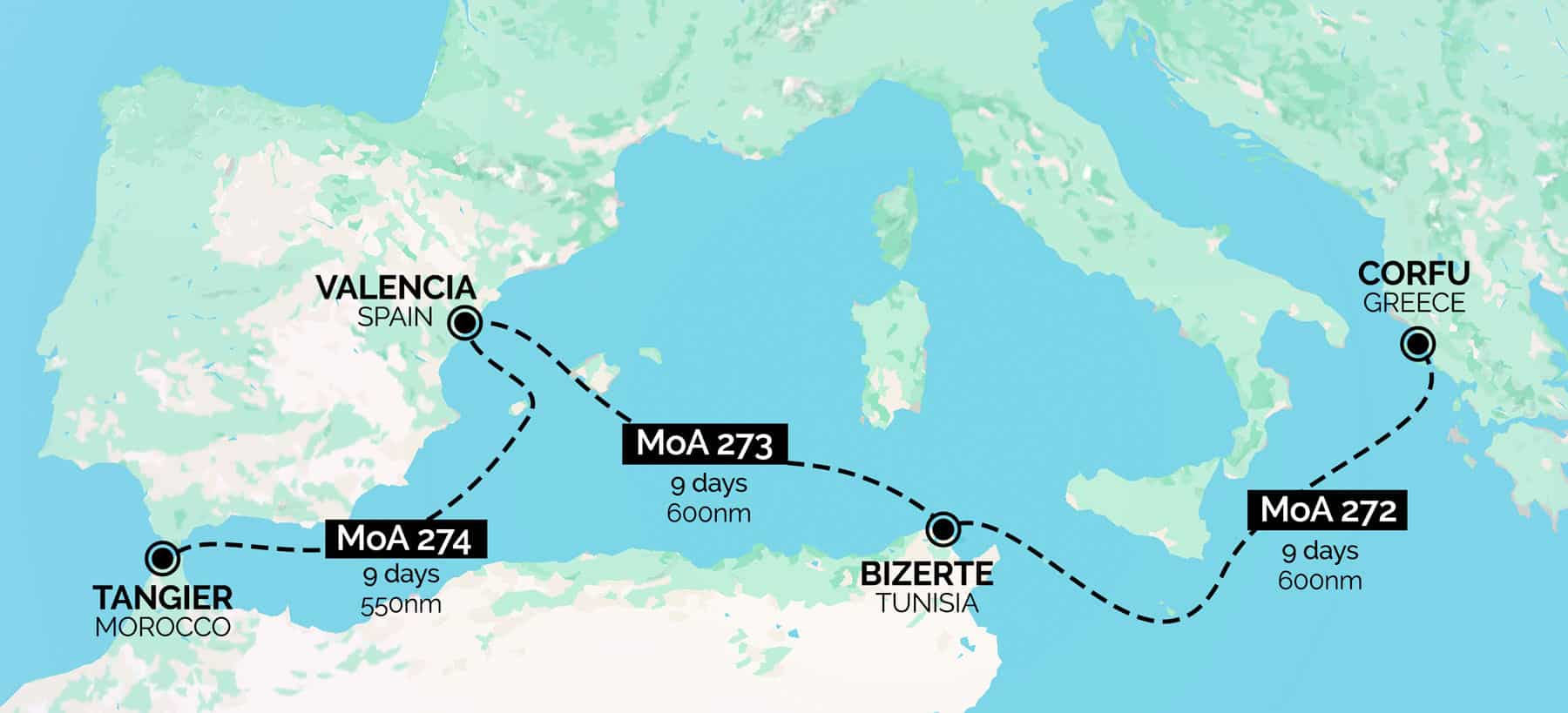
| 272 | Passagemaking | April 26-May 4 | 9 Days 600nm | Crew: Ben & Courtney | $5950 | 3 available |
| 273 | Passagemaking
Bizerte, Tunisia – Valencia, Spain (info) | May 8-16 | 9 Days 600nm | Crew: Ben & Courtney | $5950 | 4 available |
| 274 | Passagemaking | May 21-29 | 9 Days 550nm | Crew: Ben & Courtney | $5950 | 5 available |
June-July: Atlantic Ocean Passagemaking
Morse Alpha’s offshore passages are designed to give sailors real hands-on experience. You will be standing watch, troubleshooting challenges, navigating, adjusting and reefing sails, analyzing weather forecasts, checking on board systems, and implementing shipboard safety protocols. You learn by doing all of it. Offshore sailing is about preparation, sound judgment, communication, endurance, and routines. You experience the flow of big weather systems and the effects they have on wind and sea over weeks, not days. These are valuable ocean miles. We are instructing and demonstrating essential skills the entire time, but organized lessons give way to learning on the fly during the passages.
Our final leg 277, is a 250nm coastal sail training expedition exploring the rugged coast of Brittany with its large tides and strong currents. This will be a perfect opportunity for exploring beautiful anchorages, learning in a challenging environment, and crossing the busy English Channel! ASA 103 and 104 are an option on this leg.
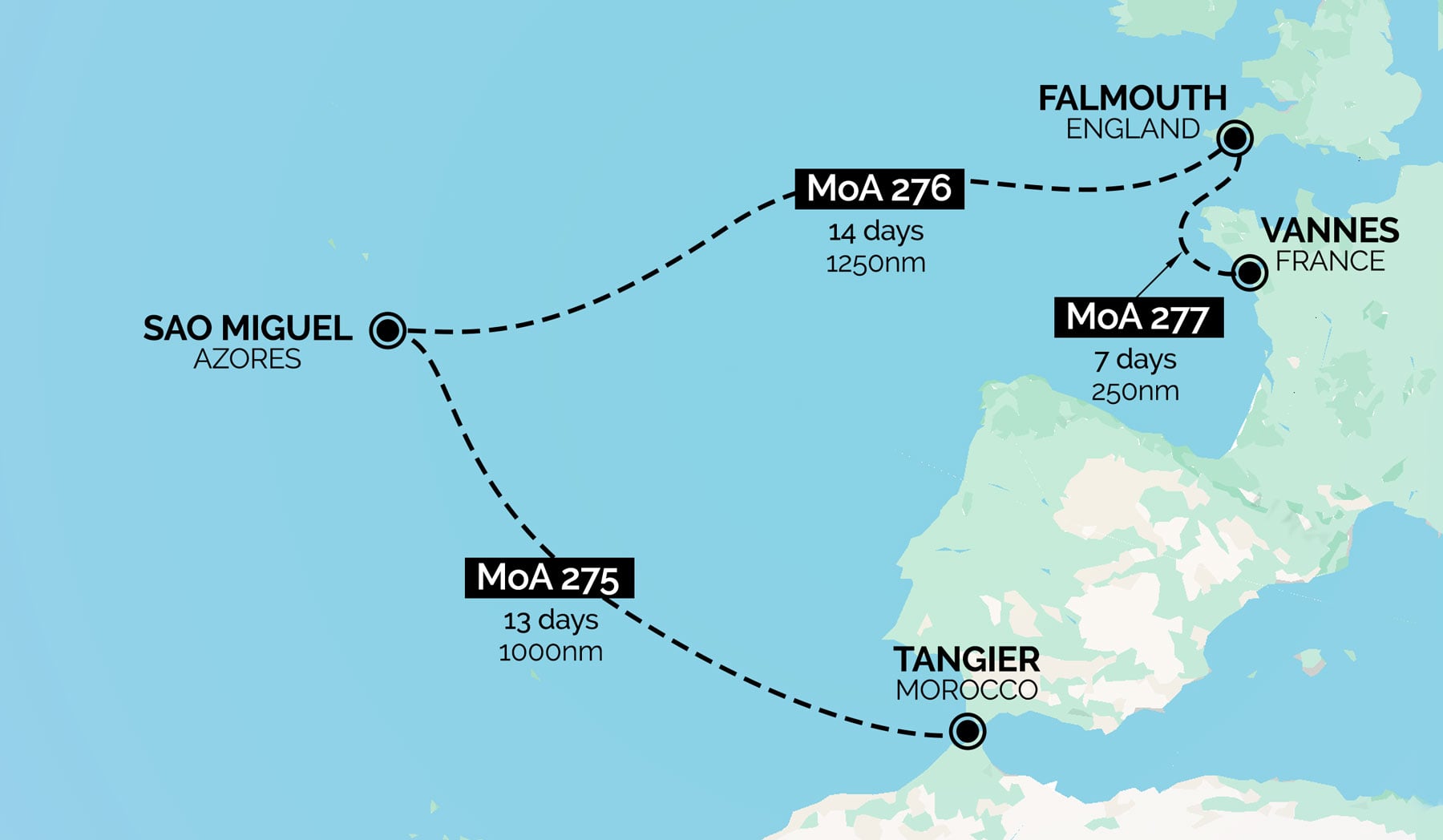
| 275 | Ocean Passage | June 6-18 | 13 Days 1000nm | Ben & Courtney | $8500 | 4 available |
| 276 | Ocean Passage
Sao Miguel, Azores – Falmouth. England (info) | June 23 -July 6 | 14 Days 1250nm | Ben & Courtney | $9250 | 3 available |
| 277 | Coastal Cruising Passage
Falmouth, England – Vannes, France (info) | July 10 - July 16 | 7 Days 250nm | Ben & Courtney | $4550 | 5 available |
OPTIONAL: If you are following the ASA curriculum, we can provide 103 & 104 certifications on coastal cruising (277). You must have previously completed ASA 101.
Sailing Course Descriptions
We base each expedition on these broad goals, but please note, our program is subject to change due to weather, illness, safety, or other unforeseen circumstances.
Sailing Course Descriptions
We base each expedition on these broad goals, but please note, our program is subject to change due to weather, illness, safety, or other unforeseen circumstances.
270 • Coastal Cruising Passage: Athens, Greece – Sarandë, Albania
270 • Coastal Cruising Passage: Athens, Greece – Sarandë, Albania
Passagemaking, Anchoring/Docking
9 Days
April 1-9
optional: ASA 103, 104
350nm
$5950
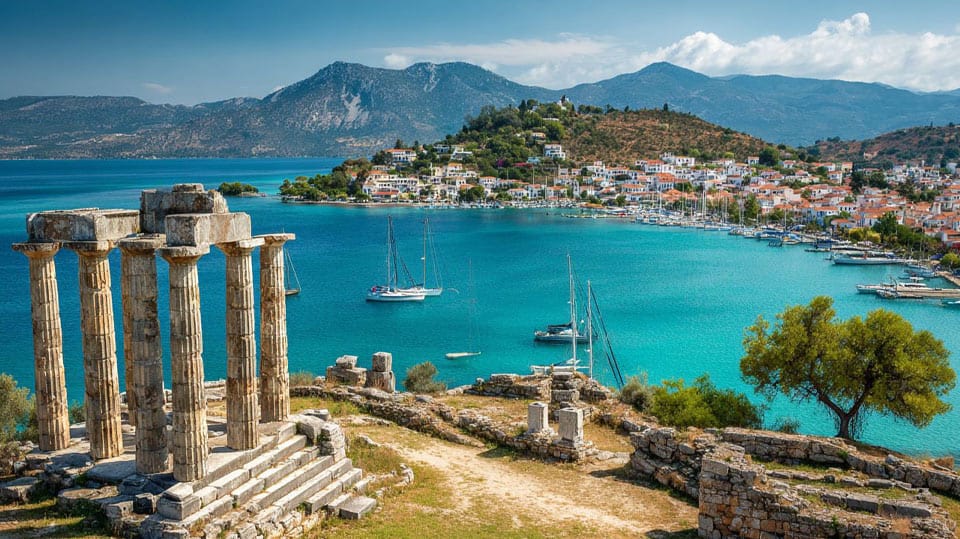
Set sail from the eastern shores of Athens amongst the Greek islands where charming harbors, ancient ruins, and clear turquoise waters make the perfect backdrop for sail training. After a anchorage or two and then passing through the historic Corinth Canal, we’ll continue north west into the Ionian Sea, before arriving in beautiful Corfu. As time permits, we’ll try to find stops along the way to rest, explore, and soak in the history, culture and cuisine. This program is the perfect balance of evening anchorages and overnight sails. It will be the ideal combination of real Med cruising, and short passage making. (Please note this expedition officially ends in Sarandë, Albania, a short ferry ride away from Corfu, the nearest airport)
271 • Coastal Cruising in the Ionian Sea
271 • Coastal Cruising in the Ionian Sea

cruising w/ 1 overnight sail
6 Days
April 26 – May 4
optional: ASA 103, 104
300nm
$3950
We begin in Sarandë, Albania, just across the water from Corfu, and spend the week sailing the northern Ionian with a focus on practice rather than passage-making. April is spring in this region: the dependable summer Maistro has not yet settled into its usual daily pattern, so we may meet variable winds, passing showers, or a stronger system. Rather than count on a routine afternoon breeze, we’ll use the forecast and conditions to decide when and where to sail. Cooler evenings and quieter anchorages are part of the early-season experience. (Much preferred to the hot, over crowded summer season)
Our route will remain flexible, with possible sailing south toward Paxos and the mainland port of Parga, or farther toward Lefkada, Meganisi and—if time and conditions allow—Ithaca. The islands, headlands and channels offer varied settings for practicing navigation, sail handling and boat control. We’ll spend most evenings anchored in Greek waters, choosing each stop with the weather and the crew’s learning goals in mind.
One overnight sail will introduce the routines of night watches, navigation after dark and working together through the night. On other days, we’ll build skills through sailing drills, planning and hands-on practice, adapting the program to the conditions rather than following a fixed itinerary. The region’s history—from Corfu’s maritime past to the traditions and stories associated with Ithaca—may help shape our route, but the central aim is to become more capable sailors through time on the water.
272 • Corfu, Greece – Bizerte, Tunisia
272 • Corfu, Greece – Bizerte, Tunisia
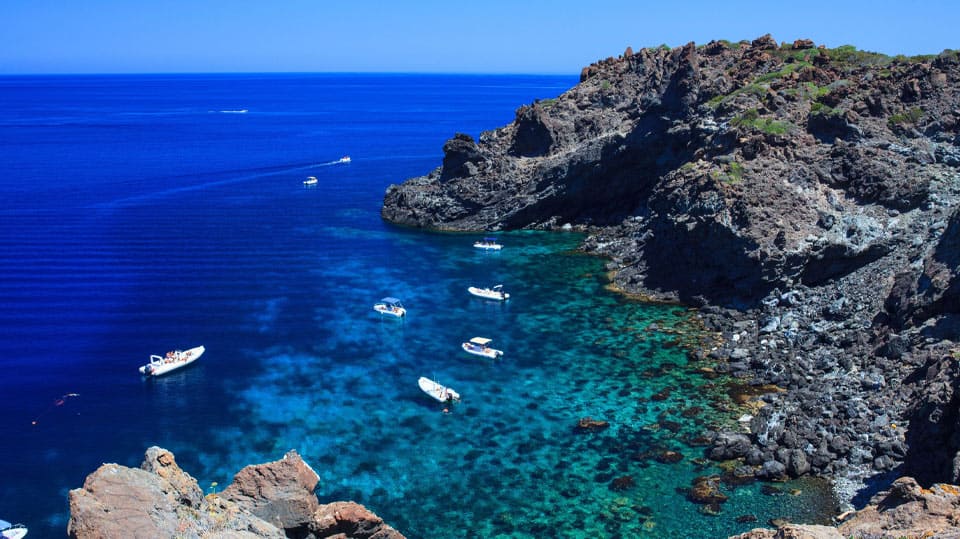
Sailing the Odyssey: We begin in Corfu — by legend, home of the Phaeacians, where Odysseus washed ashore and was welcomed by Princess Nausicaa and King Alcinous. As we prep, we’ll take in the stunning cliffs, coves, and hillsides that many believe match Homer’s descriptions. We’ll spend a night or two amongst the Ionian Islands, practicing our skills before setting off on a 350nm passage toward Malta/Sicily — where Odysseus was held captive by the nymph Calypso for seven years. Depending on winds and weather, we may stop for an anchorage or press on toward Pantelleria — the volcanic island with black lava cliffs, rugged coves, and brilliantly clear water. Our final destination is Bizerte, Tunisia, sailing past Djerba — by some accounts the land of the Lotus-Eaters, where the sweet fruit made Odysseus’ crew forget their homeland. The temptation to linger is real. In Bizerte, colorful fishing boats line the harbor alongside cafés and seafood restaurants, and the Old Port and Kasbah reflect the city’s Phoenician, Ottoman, and French-colonial past — a fitting end to a leg that follows the oldest sailing story in the Western world.
273 • Bizerte, Tunisia – Valencia, Spain
273 • Bizerte, Tunisia – Valencia, Spain
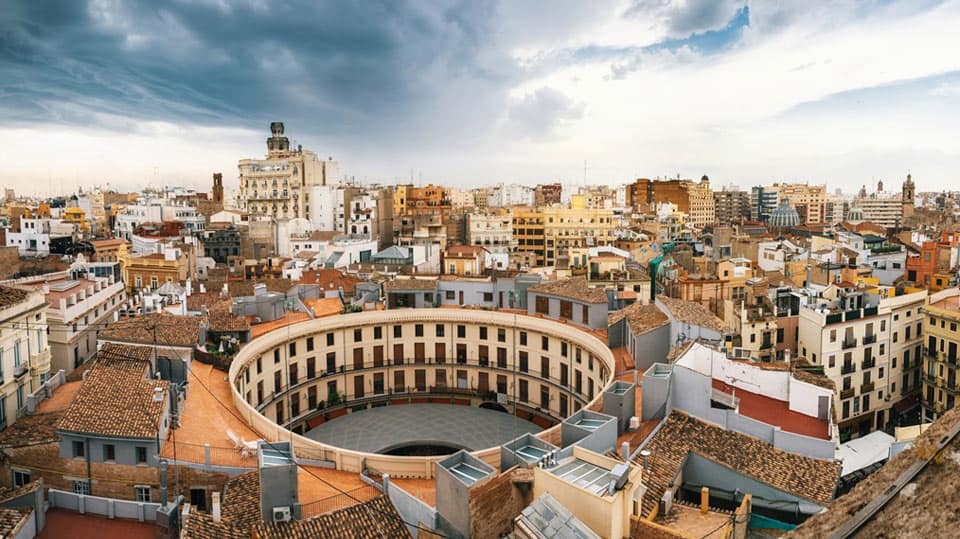
12 Parsecs: Tunisia to the Balearics Leg 2 begins in the culturally diverse, history-rich city of Bizerte — café-lined quays, a kasbah, and centuries of Phoenician, Ottoman, and French-colonial past. A proper North African port, and a worthy jumping-off point in its own right. (Wondering about that Star Wars desert-planet connection? The filming locations are all far to the south — see the “come early” notes below.) We’ll set off directly for Sardinia, an overnight sail. Plans are fluid, and weather will dictate our moves, but exploring ashore when possible is always a goal. Then we’ll plan the big jump to the Balearics together, monitoring weather trends and CAPE, with plenty of commercial traffic to keep us on our toes. Aboard Rocinante (named after a spaceship in a Rush song) with her dinghy Tantive IV (named after Princess Leia’s escape pod) we can’t promise you a galaxy far, far away. What we can promise: serious miles, real decisions, and one of the great crossings of the Mediterranean. Han Solo made the Kessel Run in less than twelve parsecs. We’ll cross the Middle Sea in about 36 picoparsecs. Try not to be impressed.
Come Early to visit Tatooine: Dream of walking the desert planet? Tunisia’s Star Wars filming locations are a multi-day side trip from Bizerte — arrive a few days early and plan your own adventure. We’ll connect you with shipmates making the same pilgrimage. Just bring your stories back to the dock; Capt Ben will want to hear them all.
274 • Valencia, Spain – Tangier, Morocco
274 • Valencia, Spain – Tangier, Morocco
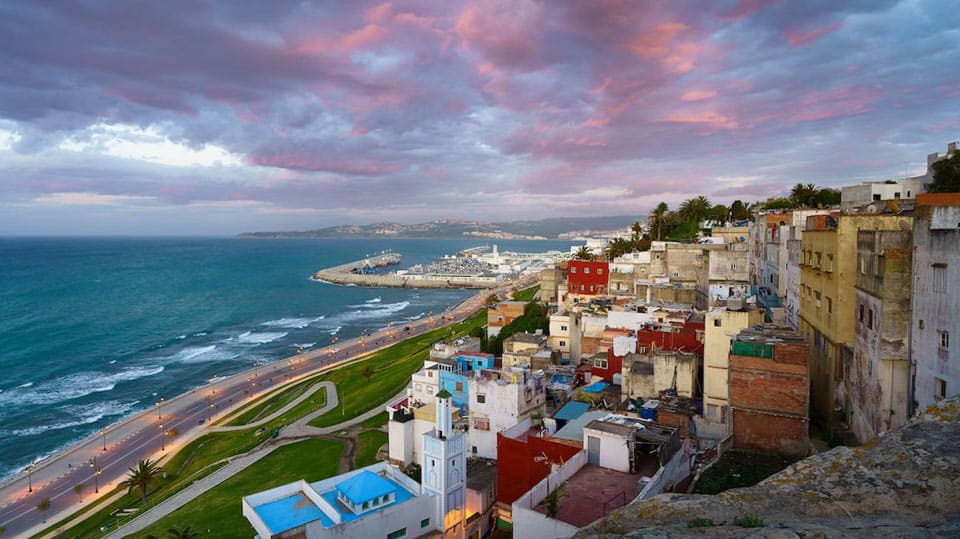
Leg 3 of the Mediterranean Crossing
We leave Valencia and shape our route across the western Mediterranean toward Ibiza, using the passage to build experience in open-water navigation, watchkeeping and sail handling. The Balearic Sea may offer settled summer sailing, but conditions still depend on the wind and weather pattern: afternoon breezes can build, while stronger regional winds or changing forecasts may call for a revised plan. After a short stop in Ibiza to rest and prepare, we’ll continue southwest toward Morocco. The stop is a practical pause in a passage with miles to make—not a leisurely island-hopping cruise.
As we approach the Strait of Gibraltar, the focus shifts to a complex and heavily trafficked passage. The strait funnels winds and currents, while commercial ships converge through a narrow corridor—at times it can look a little like Frogger, with vessels moving across the horizon in every direction. The comparison is only visual: there’s no darting between ships. We’ll plan our crossing carefully, maintain a proper lookout, respect the traffic separation scheme and collision-prevention rules, and make decisions early. The prevailing surface flow runs from the Atlantic into the Mediterranean, against us as we head west, so we’ll also take the current and forecast into account when timing the transit.
This leg is a chance to practise the full passage routine: reading the weather, planning a route, standing watches and adapting to changing conditions. After clearing the strait, we’ll make our landfall in Tangier, where the voyage brings us into a different maritime and cultural setting. The route and timing will remain flexible, shaped by the conditions and the needs of the boat and crew.
275 • Tangier, Morocco – Sao Miguel, Azores
275 • Tangier, Morocco – Sao Miguel, Azores
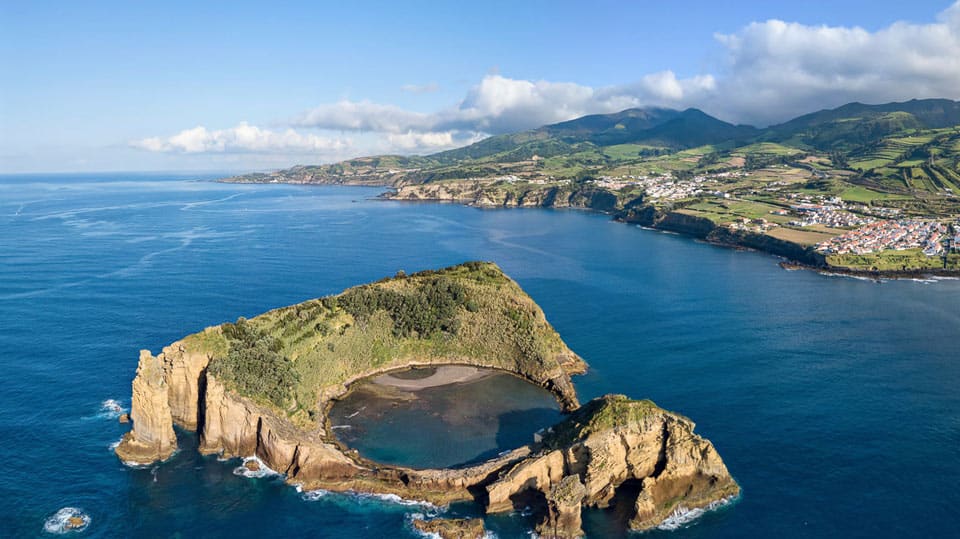
Atlantic Passage Leg 1:
Leaving Tangier, we’ll plan our westbound transit through the Strait of Gibraltar—a demanding start to the passage, where wind, tide and current all influence the timing. The Strait’s surface current generally runs east into the Mediterranean, so a westbound yacht must account for adverse flow as well as the strong, funnelled winds around Tarifa. Commercial traffic and the traffic separation scheme add another important layer to the navigation. We’ll use the transit to put passage planning into practice, weighing the forecast and tidal information before committing to a route.
Once clear of the Strait, we’ll shape our route toward the Azores around the evolving weather. In June, the Azores High may bring settled periods and light winds, while Atlantic fronts and low-pressure systems can still affect the passage. Along the Iberian coast, the south-flowing Portugal Current and seasonal northerly winds may also influence progress; their effect depends on our track and the conditions at the time. This is a passage where the shortest line on the chart may not be the best route, and where crews learn to assess wind, current, sea state and forecast together.
Underway, crew members will take part in watchkeeping, sail handling, weather observation and navigation—including opportunities to practise sextant work when conditions allow. We’ll make decisions as a team and adjust the passage plan to suit the boat, crew and weather. Our landfall in the Azores will mark the end of a substantial offshore passage and the culmination of days spent developing the judgment and routines of ocean sailing.
276 • São Miguel, Azores – Falmouth, England
276 • São Miguel, Azores – Falmouth, England
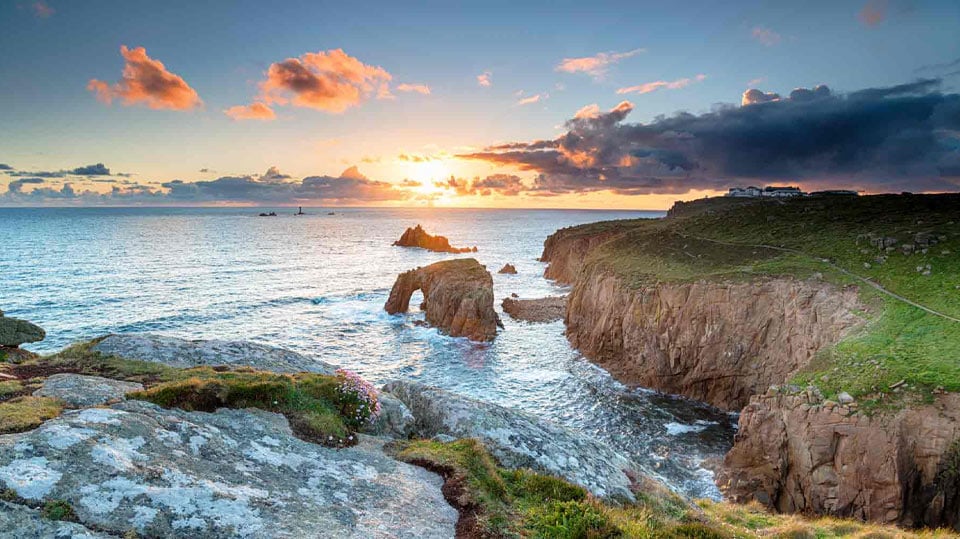
Atlantic Passage Leg 2:
We will leave the dramatic volcanic island of São Miguel, and initially head north-northeast rather than steering directly toward England. This is a classic North Atlantic passage but the area is capable of producing fast-moving lows, rough seas, and long periods of calms. It is a beautiful but serious blue-water passage: long enough to feel like a genuine full ocean crossing, often rewarding with dolphins, seabirds, spectacular skies, and fast sailing—but with a distinctly cooler, and less predictable character. As weather permits, celestial navigation will be a fun part of the offshore day.
277 • Falmouth, England – Vannes, France
277 • Falmouth, England – Vannes, France
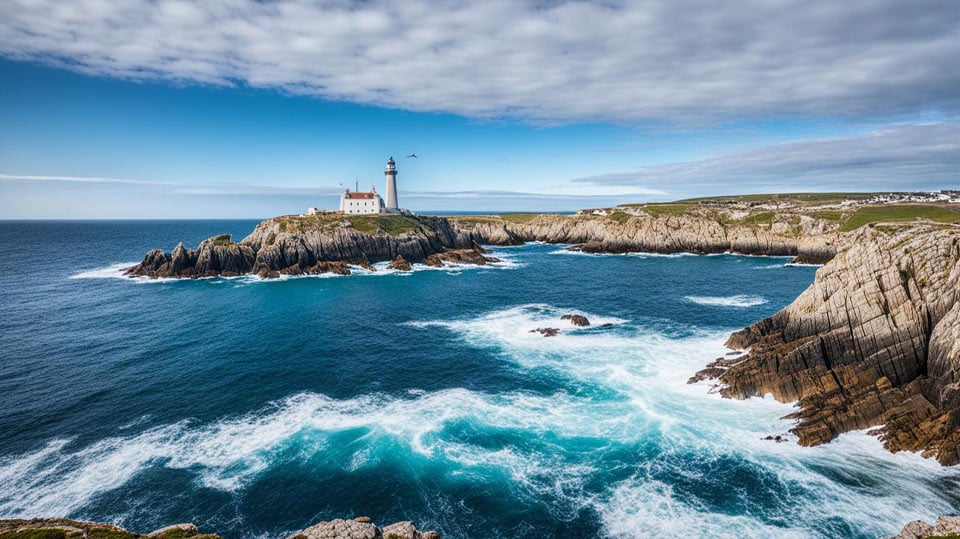
Coastal Cruising PAssage
7 Days
july 10 - 16
250nm
$4550
Sailing the Breton Coast:
We begin in Falmouth, where Cornwall’s sheltered waters give us room to prepare, practice our sail handling, and get to know the boat before crossing the Channel. Then we’ll set a course for Brittany, shaping our route around the weather and the tides. This is a coast that rewards careful passage planning: Atlantic swell, rocky headlands and powerful tidal streams make passages such as the Chenal du Four and Raz de Sein demanding when conditions are unfavourable. We’ll learn how wind, tide, sea state and visibility shape a safe route—and why patience and good timing are essential.